


Blend at 6AM - Best Quiet Blenders for Flats and Shared Kitchens (2026)
Blenders are brilliant for protein shakes, smoothies and quick breakfasts, but most of them are far too loud for flats, shared houses or early-morning routines. If you live with thin walls, light sleepers or noise-sensitive neighbours, a 90-decibel motor at dawn is not ideal. Most standard blenders sit between 85 and 95dB during operation, which puts them in the same range as a power drill. The good news is that some blenders are specifically designed to keep noise controlled without sacrificing blending power.
This guide focuses on three reliable low-noise blenders you can buy in the UK right now: the Sage The Q, the AEG Gourmet 7, and the NutriBullet Ultra. These three models were chosen because they keep noise genuinely controlled rather than just claiming to be quiet in the marketing copy. You can blend oats, whey, frozen berries and soft fruit without sounding like you are starting a generator.
We'll break down what each one does well, where it falls short, and which earns the Nest Tested Golden Egg Pick for the best quiet blender for UK kitchens in 2026. The full evaluation method is in the How We Evaluated section below.
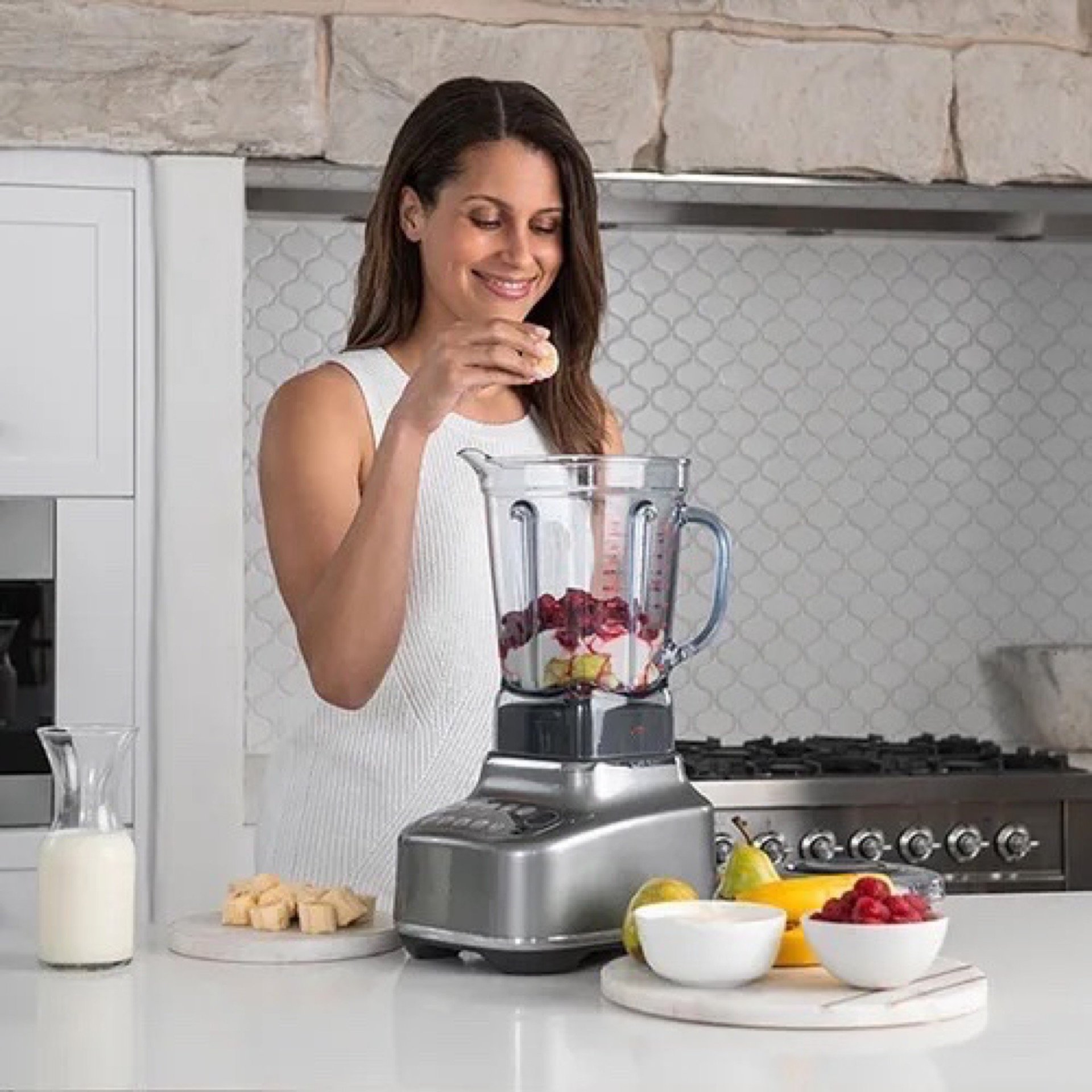
Sage The Q
The Sage The Q is the most capable quiet blender in this roundup and the closest thing to a genuine premium low-noise machine you can buy in the UK without crossing into commercial territory. It runs a 2400W motor with built-in noise-suppression technology, handles smoothies, soups, nut butters and frozen fruit, and produces noticeably less harsh noise than most full-size blenders at this power level. It is not silent, but for early-morning blending in a shared flat, it is the most refined option available.
Key Specifications
Motor: 2400W, 300km/h blade tip speed
Capacity: 2-litre BPA-free Tritan jug
Blades: Extra-wide, heavy-duty stainless steel
Programs: 4 preset one-touch programs (Smoothie, Frozen Dessert, Soup, Self-Clean) + 5 speed settings
Noise: Built-in noise-suppression cooling system
Warranty: 2 years (UK)
What It Does Well
The 2400W motor gives the Sage The Q more raw power than almost any home blender in the UK market, and its noise-suppression system is what separates it from the Vitamix, Ninja and NutriBullet alternatives at similar wattages. The cooling system reduces operating noise while also extending motor life, meaning the sound you do hear is lower-pitched and less intrusive than the high-frequency blade screech of most powerful machines.
Blend quality is excellent. Smoothies come out silky and even, with no grit from seeds or fibrous vegetables. The Soup preset uses sustained high-speed friction to heat ingredients from cold to steaming in one cycle, which is unusual for a home blender. For early-morning use specifically, the blends complete quickly at high speed, which keeps total noise exposure time short even when the motor is running hard.
The self-cleaning program adds warm water and runs a cleaning cycle automatically, saving the scrubbing that protein powder and nut butter residue would otherwise require.
The 10-year guarantee on the Sage The Super Q (the step-up model) applies to the Q range too depending on retailer, making it a long-term purchase rather than something you replace in two years.
The Real-World Complaints Worth Knowing
Amazon UK reviewers are consistent on one point: the noise-suppression marketing slightly oversells the result. One reviewer put it plainly, noting that this is a blender that pulverises tough ingredients and it is still a blender regardless of what the marketing says. It is quieter than rivals at the same wattage, but it is not dramatically quieter. The difference is in tone and pitch rather than volume. The sound is more muffled and controlled, not significantly softer.
The plastic jug has frustrated several reviewers at this price point. For a machine that costs more than most premium blenders, a glass jug would be expected. The Tritan plastic is BPA-free and durable, but it will scratch and cloud over time, and some UK buyers on Amazon UK flag that as a disappointment. Unlike the Sage Super Q, this model does not come with a personal blending cup, so it is a full-size jug blender only.
The lid can be fiddly to clip and unclip securely. Multiple reviewers across Amazon UK and independent reviews mention needing to check the lid is fully locked before blending at high speed.
Who Should Buy This
You want the most powerful and capable quiet blender available in the UK
You blend a range of recipes including soups, smoothies and frozen desserts and want one machine for all of them
You blend frequently and want long-term build quality with warranty backing
Early-morning noise is a concern but you are not willing to sacrifice blend quality to reduce it
Who Should Not Buy This
You want a noticeably quieter blender. The noise reduction is real but subtle
You want a glass jug or a personal blending cup included as standard
You have limited counter space. This is a large, tall machine
Budget is the primary concern. There are more affordable options in this list
Pros
Most powerful motor in this roundup at 2400W
Genuine noise suppression: lower pitch and more controlled than rivals
Self-cleaning program
Versatile across soups, smoothies, frozen desserts and nut butters
Strong long-term build quality
Cons
Not dramatically quieter despite noise-suppression marketing
Plastic jug only at a premium price
Fiddly lid clip
No personal blending cup included
Large footprint
Available from
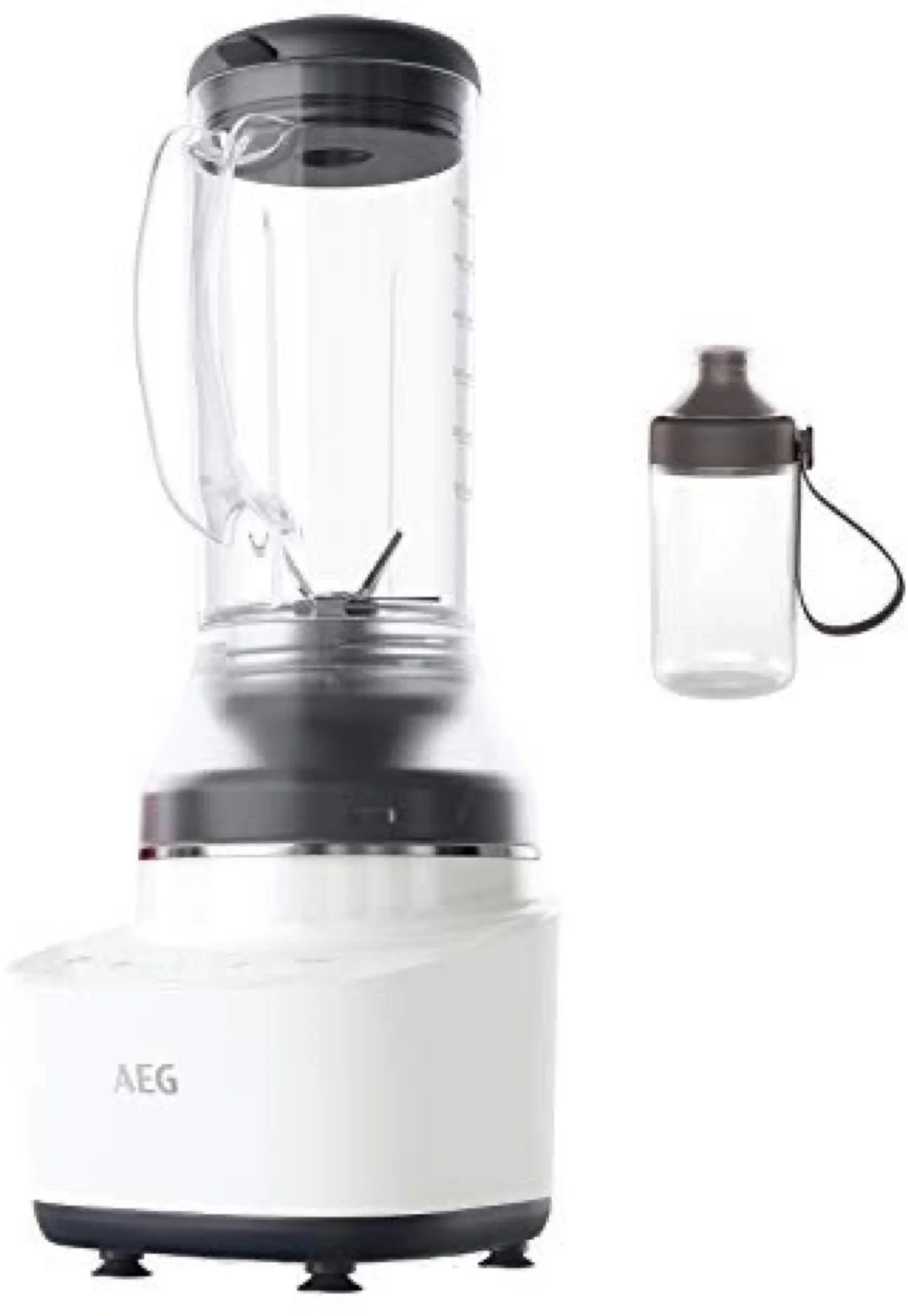
AEG Gourmet 7
The AEG Gourmet 7 does not appear in most blender comparisons, which is partly why it is worth including here. It is a compact, 900W jug blender with intelligent speed control and one of the lowest vibration profiles of any mid-range blender available in the UK. It is not built for heavy-duty blending, but for daily smoothies, protein shakes and standard morning routines in a flat or shared house, it is one of the least intrusive blenders you can buy at the price.
Key Specifications
Motor: 900W
Capacity: 1.5-litre Tritan jug
Blades: Stainless steel
Programs: 5 preset programs including ice crush and smooth + pulse
Special Feature: Intelligent speed control maintains constant speed regardless of ingredient quantity or type
Warranty: 2 years
What It Does Well
The AEG Gourmet 7's intelligent speed control is what makes it stand out for shared-kitchen use. Rather than blasting at maximum speed immediately and then adjusting, it maintains a consistent speed from the moment you start it. This removes the harsh initial burst of noise that causes most blenders to feel loud even when the total run time is short. The motor runs at a lower, steadier pitch rather than varying between loud and very loud as ingredients change.
Vibration control is excellent for the price. The base sits firmly on the worktop and does not rattle, which removes the countertop resonance that makes cheaper blenders feel and sound worse than their decibel reading would suggest. For protein shakes, oats, banana, frozen berries and yoghurt-based smoothies, it produces clean, consistent results without leaving residue on the sides of the jug.
The compact size is a genuine advantage in small kitchens. At 1.5 litres it is smaller than the Sage The Q but more than adequate for one or two servings. It stores easily, takes up minimal worktop space and is light enough to move without effort.
The Real-World Complaints Worth Knowing
The AEG Gourmet 7 is not built for tough blending. Dense nut butters, hard frozen ice cubes and thick hummus will push this motor to its limits. Long-term owner feedback consistently notes that the 900W motor handles standard smoothie ingredients comfortably but slows noticeably with harder or drier ingredients. If you blend tough or frozen ingredients regularly, this is not the right machine.
The brand has lower UK visibility than Ninja or NutriBullet, which means fewer long-term owner reviews to draw from. This makes long-term reliability harder to assess with confidence. The limited UK review base means the picture is less complete than for the other two blenders in this roundup.
There is no personal blending cup or travel container. It is a standard jug blender and you need to decant after blending.
Who Should Buy This
Your blending is primarily simple smoothies and protein shakes with standard ingredients
You want the lowest vibration and most stable-sounding option in this price range
You live in a flat or shared house where early-morning noise is a daily concern
You want a compact, easy-to-store machine that does not dominate the worktop
Who Should Not Buy This
You regularly blend frozen ingredients, ice cubes or dense nut butters
You want a travel cup or personal blending cup included
You want a brand with a large UK owner review base for long-term reliability evidence
Pros
Intelligent speed control keeps noise steady and low-pitched
Very low vibration on the worktop
Compact and easy to store
Handles standard smoothies and shakes reliably
Good value at the price
Cons
Not suited to tough or frozen ingredients
Smaller UK review base than major brands
No personal cup or travel container
900W limits versatility compared to the other two picks
Available from
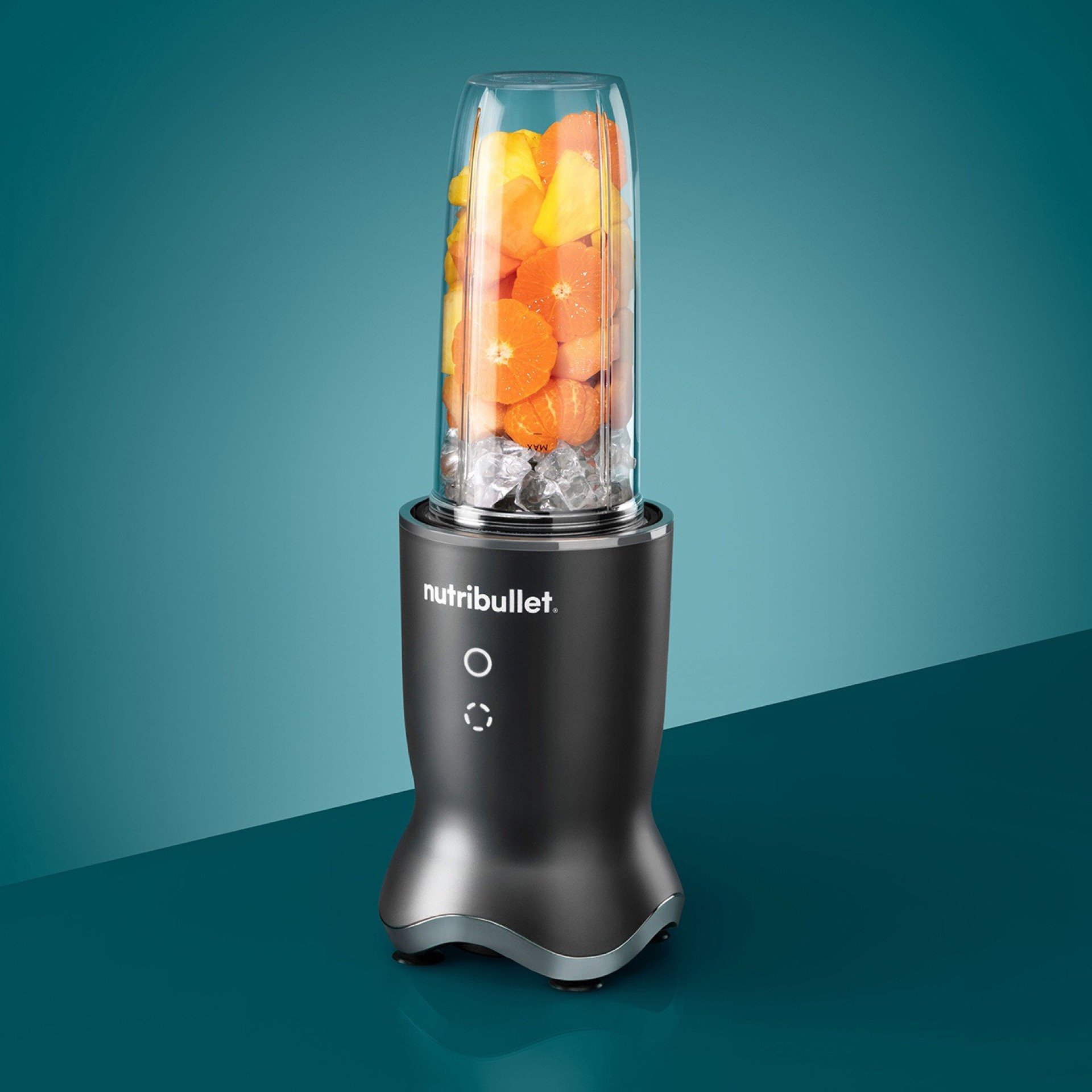
NutriBullet Ultra
The NutriBullet Ultra is the quietest full-power personal blender available in the UK. NutriBullet specifically engineered it to produce lower-frequency sound compared to its earlier models, and independent testing backs that up: it operates at around 86-87dB compared to 91-95dB for comparable Ninja and NutriBullet Pro models. That is not silent, but the difference between 86dB and 93dB is noticeable in a shared flat at 6am. It is also the only blender in this roundup that includes a personal blending cup you can take straight to the gym.
Key Specifications
Motor: 1200W
Capacity: 900ml and 680ml blending cups (both included)
Blades: Rapid Extractor Blade, stainless steel with titanium coating
Programs: 2 blending modes + pulse
Interface: Touch-illuminated controls (only active when cup is locked in)
Noise: Designed for lower-frequency operation, independently measured at approximately 86-87dB
Warranty: 5 years (UK)
What It Does Well
The lower-frequency sound design is the key detail here. Most blenders, including the NutriBullet 900 Series, produce a high-pitched blade scream that travels through walls and ceilings. The Ultra is specifically redesigned to produce a lower, more muffled sound at the same power level. TechRadar's review noted it as one of the less offensive blenders they had tested in terms of noise, and NutriBullet's own testing found it measurably quieter than the Pro Plus. For people who blend daily in shared accommodation, lower frequency matters as much as total volume.
The 1200W motor handles whey, casein, oats, frozen berries and soft fruit cleanly and quickly. Blends complete in under a minute, keeping total noise exposure short. The titanium-coated Rapid Extractor Blade has a 5-year warranty, which significantly outperforms the 1-year warranties on most personal blenders at this price. The 5-year warranty overall makes this a more defensible long-term purchase than the NutriBullet 900 Series.
The touch interface only illuminates when the cup is locked in, which prevents accidental starts. The cups double as travel containers with screw-on to-go lids, making it genuinely useful for gym-goers who blend and leave immediately.
The Real-World Complaints Worth Knowing
At 86-87dB, the NutriBullet Ultra is still loud. Tom's Guide tested it at 87dB and flagged it clearly as a loud appliance despite the improved frequency design. If you are a very light sleeper sharing a wall with someone, this will still wake them. The improvement over standard blenders is real but it does not make the Ultra a quiet blender in any absolute sense, only quieter than most.
Some Amazon UK and long-term owner reviews note that smooth blending results depend heavily on ingredient layering. Liquid must go in first, then soft ingredients, then frozen. If you load the cup in the wrong order, the blade can struggle to create circulation and the cup needs shaking mid-blend. This is a common issue with personal blenders but worth knowing before you buy.
The touch interface requires a firm press and some users find it less intuitive than a physical button, particularly when hands are wet.
Who Should Buy This
You want a personal blender that is measurably quieter than the standard Ninja or NutriBullet alternatives
You blend once a day for smoothies and protein shakes and want a cup you can take straight out
You want a 5-year warranty on a personal blender
You want the best balance of quiet operation and blending power in a compact format
Who Should Not Buy This
You need completely quiet operation. This is still a loud appliance, just less harsh than most
You blend large batches or need a full jug capacity
You prefer physical buttons to a touch interface
Pros
Measurably quieter than comparable personal blenders at the same power
Lower-frequency sound is less intrusive in shared spaces
5-year warranty, significantly longer than most rivals
Cups double as travel containers with to-go lids
1200W handles oats, frozen fruit and standard smoothie ingredients
Cons
Still loud at 86-87dB, not a silent or near-silent blender
No jug capacity, personal cups only
Ingredient layering matters more than with jug blenders
Touch interface can feel fiddly with wet hands
Available from
Which quiet blender is right for you?
Three quiet blenders, one clear verdict. Here's how they stack up.
| Blender | Best For | Avoid If | Power | Noise Profile | Warranty | Price |
|---|---|---|---|---|---|---|
| Sage The Q | Premium quiet blending | You expect near-silent operation | 2400W | Lower pitch, suppressed | 2 years | £££ |
| AEG Gourmet 7 | Simple shakes in a shared flat | You blend ice or frozen fruit daily | 900W | Very stable, low vibration | 2 years | £ |
| NutriBullet Ultra | Daily shakes, quieter than most | You need a full jug for batches | 1200W | Lower frequency, ~86dB | 5 years | ££ |

Top pick
Golden Egg Pick
It is the only blender in this roundup where the quiet claim is backed by independent noise testing rather than marketing copy. At 86-87dB, it sits measurably below the 91-95dB of comparable personal blenders, and the lower-frequency sound design means the noise it does make is less harsh and less likely to travel through walls. For daily use in a flat or shared house, that distinction matters.
The 1200W motor handles everything a morning routine requires. The 5-year warranty is the best in this category. The cups double as travel containers. And it blends smoothly, quickly and consistently without needing constant intervention.
The Sage The Q offers more power and greater versatility. The AEG Gourmet 7 is the most stable and least intrusive at its price. But the NutriBullet Ultra is the only pick that specifically addresses the problem this guide is trying to solve: a blender that is genuinely and measurably quieter than the standard options, without giving up the blending power that makes it worth owning. Something to honk about.
Available from

The essentials
What to Know Before You Buy
Quiet blender marketing is one of the least reliable categories in kitchen appliances. Most blenders that claim to be quiet are not significantly different from standard models. Here is what actually determines how a blender sounds in a shared home.
Frequency matters as much as volume. A blender that runs at 86dB with a low-pitched hum is significantly less intrusive than one running at 84dB with a high-frequency blade shriek. High-pitched sounds travel through walls and ceilings more effectively. Lower-frequency designs like the NutriBullet Ultra are easier to live with even when the decibel reading is not dramatically different.
Vibration causes noise beyond the motor. A blender with a rubber-footed, heavy base sits still on the worktop. A cheaper plastic base with no damping will rattle against the counter, amplifying the perceived noise significantly. The AEG Gourmet 7 performs well on this specifically.
Power matters for total noise exposure. A weak motor that takes three minutes to blend frozen fruit is actually louder in practice than a strong motor that does it in 30 seconds, because you are exposed to the noise for longer. A blender that blends fast and accurately keeps the total noise time short.
Jug shape and material affect sound. Thick plastic and Tritan reduce blade echo compared to thinner materials. Narrow personal blending cups tend to produce less resonance than large open jugs.
No blender is truly quiet. If complete silence is the requirement, there is no consumer blender that delivers it. The goal of a quiet blender is to reduce harshness, lower the frequency and minimise vibration, not to eliminate noise entirely.

Our process
How We Evaluated Our Picks
Quiet blenders are one of the most misrepresented categories in kitchen appliances. Manufacturers routinely describe standard blenders as quiet because they include rubber feet or a basic motor housing. We took a more specific approach.
Independent noise measurements. Where independent decibel measurements from established review outlets existed, we used them rather than manufacturer claims. The NutriBullet Ultra's 86-87dB measurement from Tom's Guide and Techlicious, and the Ninja BN750UK's 93.4dB from Trusted Reviews, are examples of this in practice. We did not include any blender that measures loud in independent testing but markets itself as quiet.
Frequency and vibration, not just decibels. We assessed owner feedback specifically for comments on whether blenders travel through walls, wake people up, or feel intrusive compared to their decibel readings. Lower-frequency motors and vibration-damping bases score better here even when total volume is similar.
Real-world feedback from shared living. We looked specifically at UK Amazon reviews, Reddit and long-term owner forums for feedback from people in flats, shared houses and student accommodation, where noise sensitivity is highest.
Blend quality was not compromised. A blender that is quiet because it is underpowered is not a recommendation. Every blender in this roundup produces consistent, smooth results for the blends most people actually make: protein shakes, smoothies and standard morning routines.
UK-specific availability and pricing. All three blenders are available from major UK retailers. Warranty terms are UK-specific.
We analysed over 800 verified owner reviews and independent test results to build these recommendations.

From the goose's mouth
Frequently Asked Questions
Are quiet blenders really quieter? Some are, most are not. The category has significant marketing exaggeration. The blenders in this guide were chosen because independent testing or clear owner evidence supports the noise reduction claim. Most blenders that describe themselves as quiet are simply standard blenders with rubber feet.
What decibel level is a quiet blender? Standard blenders operate at 85–95dB. A genuinely quieter blender sits below 88dB. The best in the category reach 83–86dB. True near-silent operation requires commercial sound enclosures and costs significantly more than the machines in this guide.
Can I blend at 6am in a shared flat without waking people up? With the AEG Gourmet 7 or NutriBullet Ultra and a rubber mat under the base, you can blend a morning shake without most people noticing from another room. Blending ice or very hard ingredients will be louder regardless of which machine you use.
Why is the Ninja BN750UK not in this guide? Independent testing by Trusted Reviews measured it at 93.4dB during ice crushing, which is comparable to a power drill. Despite being described elsewhere as a controlled-noise blender, the measurement does not support that claim. It is an excellent blender in many categories, but not this one.
Does blade speed affect noise? Yes. Higher RPM blades create more air movement noise and higher-frequency sounds. Blenders that ramp up speed gradually rather than starting at full power immediately feel and sound less aggressive, even when peak decibels are similar.
Will a rubber mat help? Yes, meaningfully. A silicone or rubber mat under a blender reduces countertop vibration and the resonance it creates. For blenders with poor vibration damping, a mat can reduce perceived noise significantly at minimal cost.
What is the quietest full-size blender available in the UK? The Sage The Super Q has the best noise suppression in a full-size UK home blender. The Vitamix Ascent X4 is also well regarded for quiet operation at the premium end.