


Smooth Gains Only - Best Blenders for Protein Shakes in 2026 (UK Guide)
Most people buying a protein shake blender fall into one of three camps. The first wants something cheap, fast and straightforward, because they're mixing whey with milk and don't need a machine that could crush concrete. The second trains hard, eats a lot, and needs something that handles oats, peanut butter and frozen fruit daily without burning out after six months. The third lives with other people, wants one machine that does everything, and won't dedicate counter space to a dedicated shake blender.
A bad blender doesn't just make lumpy shakes. It makes you late, grumpy and covered in whey. Not all blenders are cut out for the job. Some crack under pressure faster than your motivation on a rest day. We've done the legwork so your morning doesn't have to go pear-shaped.
This guide covers all three. NutriBullet 900 Series is for the first group. Tefal Perfect Mix+ BL811 is for the second. Ninja 2-in-1 BN750 is for the third.
If you just mix whey with milk or water, skip to the NutriBullet. It costs less and does the job. If every shake has oats, frozen banana or nut butter in it, go straight to the Tefal or the Ninja. If you want one blender that covers shakes, smoothies and the occasional batch of soup, the Ninja is the safer all-round buy.
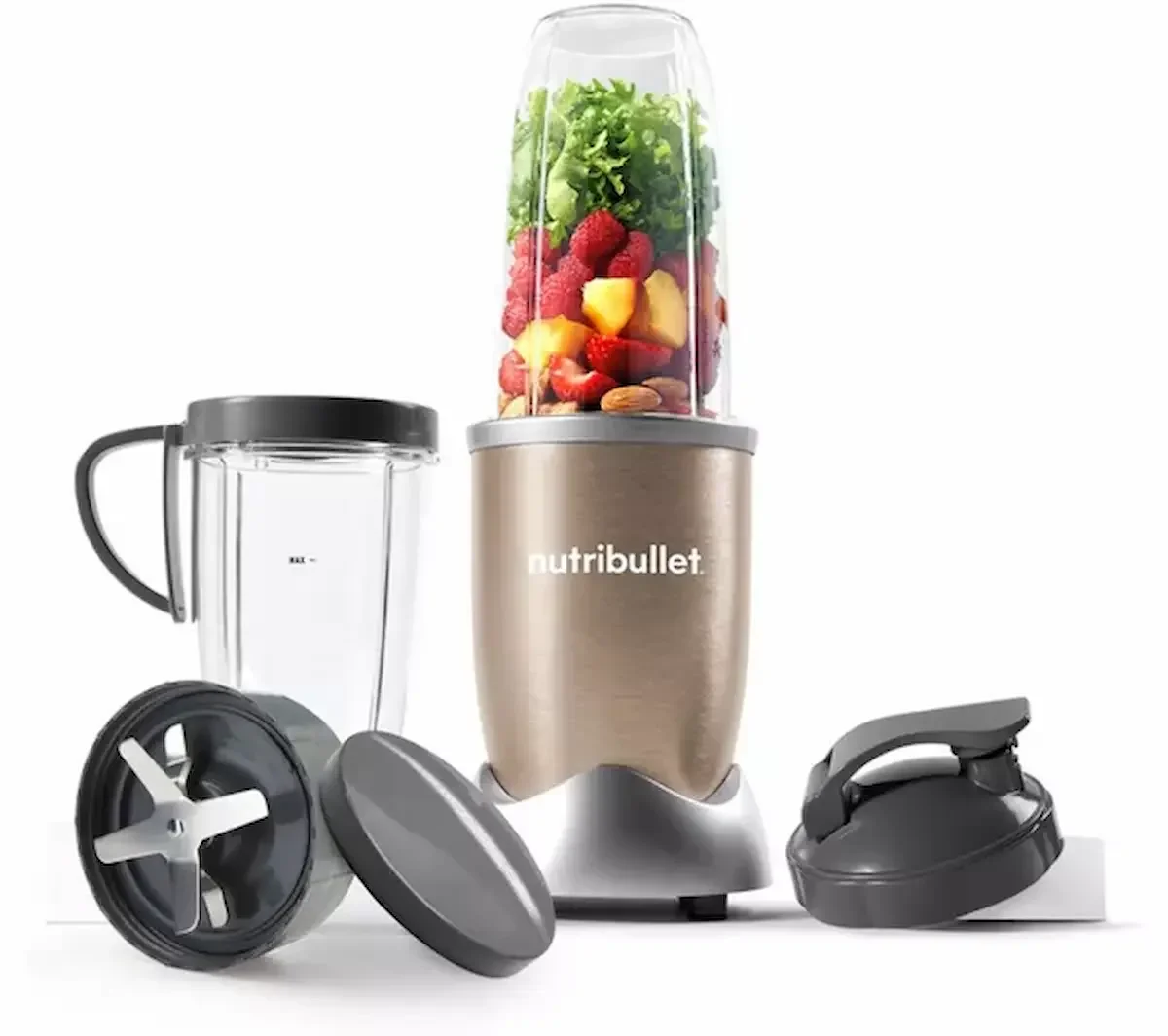
NutriBullet 900 Series
The NutriBullet 900 is the right blender if you want something that works every morning without you having to think about it. It is not the most powerful option here and it is not trying to be. What it does is blend a clean whey or casein shake quickly, rinse out in seconds, and stay out of your way. It has sold tens of millions of units for exactly that reason.
Key Specifications
Motor: 900W, 24,000 RPM
Capacity: 600ml and 900ml cups
Blade: Extractor stainless steel, 6 prongs
Controls: Push-down twist, one speed
Warranty: 1 year
What it does well
For a standard protein shake, the NutriBullet 900 is hard to beat at the price. It handles whey, casein, mass gainer and creatine without complaint. Add a banana or a spoonful of Greek yoghurt and it still blends cleanly in under a minute. The extractor blade design pulls ingredients down rather than just spinning them sideways, which means you get fewer dry pockets of powder sitting at the bottom of the cup.
The cups double as bottles with a lip ring attached, so you blend and walk straight out the door. No decanting, no extra washing up. Cleaning is genuinely fast: rinse the cup and the blade under the tap and it is done in under 30 seconds. For people blending once a day before work or the gym, this routine holds up for years.
The footprint is small enough to store in a cupboard without reorganising your kitchen around it. For students, people in shared flats, or anyone with limited worktop space, that matters.
The real-world complaints worth knowing
The most common issue reported by long-term owners is the rubber gasket seal on the blade assembly. It can work loose over time, and when it does, protein powder gets trapped underneath it. Users on Robert Dyas and Amazon UK flag this repeatedly. It is not a deal-breaker but it is worth knowing: when you clean the blade unit, take the gasket off and rinse underneath it. If you just rinse the outside, protein powder will build up and eventually cause leaks.
The motor has a one-minute run limit. Run it longer than that without a break and it will overheat. For a simple shake this is never an issue. For anything thick, like oat-heavy bulking blends, you may find yourself splitting it into two blending sessions. That is where this machine shows its limits.
Who should buy this
You make simple shakes: powder, liquid, maybe a banana
You want something reliable without spending much
You live alone or in a small flat with limited kitchen space
You want to blend and go without any cleaning faff
Who should not buy this
You add oats, frozen fruit or peanut butter to every shake. The 900W motor will struggle and may stall
You want to make more than one shake at a time. The cup sizes are not built for batch blending
You use large ice cubes regularly. Small crushed ice is manageable, full cubes are not
You want variable speeds or blend presets. There are none
Pros
Reliable for simple daily shakes
Cups work as bottles, no decanting needed
Compact and easy to store
Cleans in under 30 seconds
Good price for what it delivers
Cons
Gasket seal needs checking and cleaning regularly
One-minute run limit before the motor needs a rest
Not built for thick or heavy blends
No variable speeds
Available from
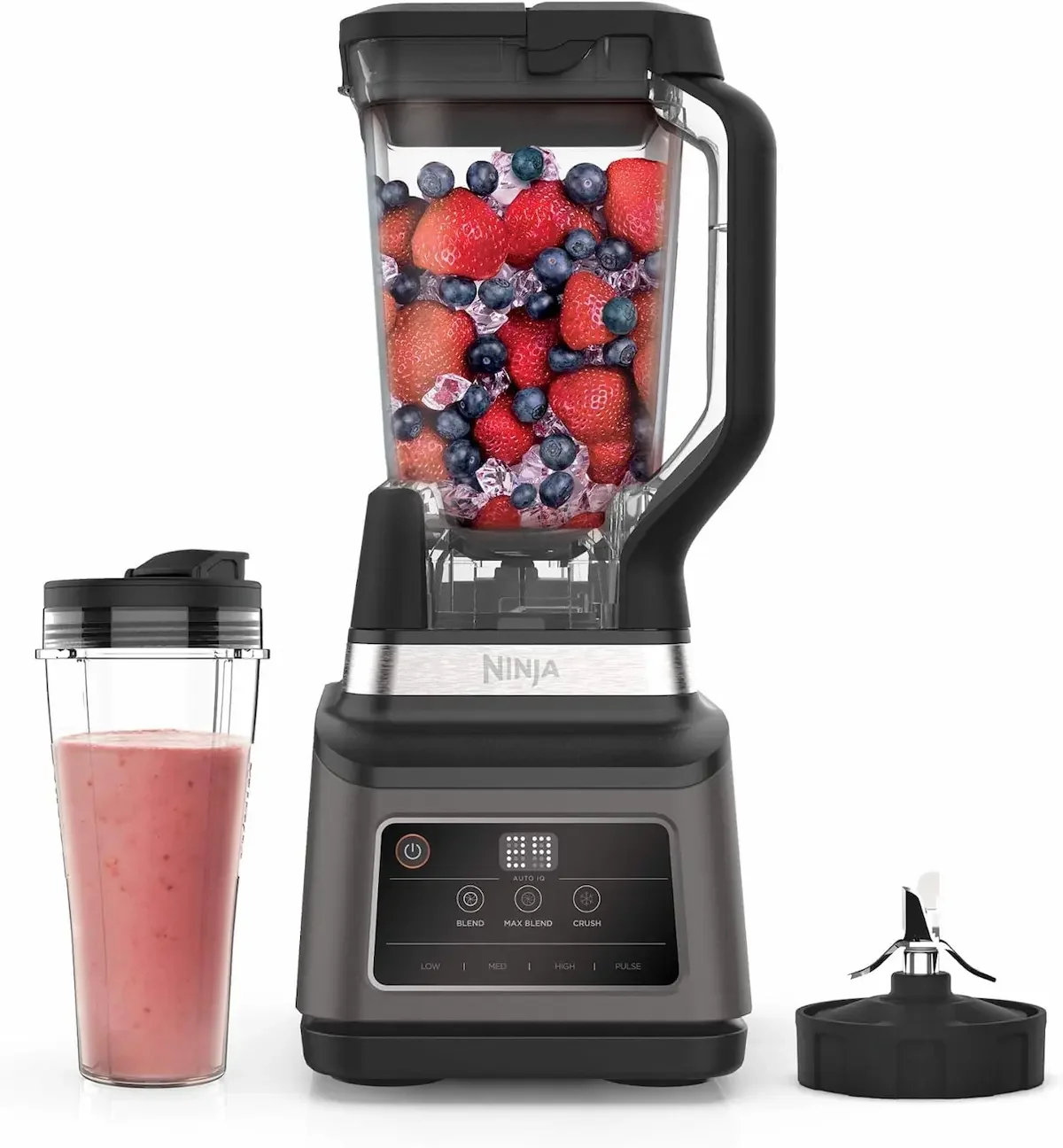
Ninja 2-in-1 BN750 Blender
The Ninja BN750 is the pick if you want one blender that handles everything without compromise. Morning shake, post-training smoothie, weekend soup, batch prep. It costs more than the NutriBullet but it justifies the price with a 1200W motor, a proper 2.1 litre jug, a dedicated 700ml shake cup and Auto-iQ technology that does the thinking for you.
Key Specifications
Motor: 1200W
Capacity: 2.1 litre jug + 700ml personal cup
Blades: Total Crushing stacked blade system
Settings: Auto-iQ presets (Blend, Crush, Max Blend) + manual pulse
Build: BPA-free Tritan plastic
Warranty: 2 years (UK)
What it does well
The 1200W motor handles oats, ice and thick powder blends without slowing down. Where a 900W machine might stall on a dense bulking shake, the BN750 pushes through it. The Auto-iQ modes are genuinely useful: instead of holding down a button and guessing when to stop, the presets automatically pulse and pause in patterns designed to pull ingredients into the blades evenly. The result is fewer dry pockets and a more consistent texture, particularly with powders that tend to clump.
The 700ml personal cup is the reason many people buy this over a simpler personal blender. It gives you the convenience of a single-serve format with the power of a full-size machine behind it. Blend directly in the cup, attach a lid and you are done. The jug then handles everything else: family smoothies, soups, sauces. One machine that does not need to be supplemented by anything else.
Long-term reliability is consistently strong. Ninja blades hold their sharpness well after extended use, and the BN750 specifically benefits from a two-year UK warranty.
The real-world complaints worth knowing
The noise is the biggest genuine complaint. Trusted Reviews measured it at over 93 decibels during ice crushing. That is louder than most blenders at this size, and loud enough that running it at 6am near a light sleeper is a real consideration. It produces more of a rattle than a hum at full power.
The 700ml personal cup has ridges on the inside that some users find annoying to clean. Protein powder and thick blends can collect in those ridges and require more than a simple rinse. It is dishwasher safe but that is not much help at 7am before work. Run some warm soapy water in it and blend on pulse for ten seconds and it cleans out fine, but it takes slightly more effort than the NutriBullet cup.
The footprint is larger than people expect. If counter space is tight this is worth measuring before buying.
Who should buy this
You want one blender that covers shakes and everything else
You add oats, frozen fruit or ice to shakes regularly
You live with other people who also use the blender
You want a blend-and-go cup without sacrificing power
Who should not buy this
You only make simple whey shakes. The NutriBullet does that for less money
You have very limited counter space. This takes up more room than a personal blender
Early morning blending near light sleepers is a concern. It is genuinely loud
You want something lightweight and portable
Pros
1200W motor handles oats, ice and thick blends without stalling
Auto-iQ gives more consistent texture than manual blending
Includes both a full jug and a personal shake cup
Two-year UK warranty
Strong long-term reliability
Cons
One of the louder blenders at this size
Inner ridges on the personal cup need more care when cleaning
Larger counter footprint than personal blenders
Available from
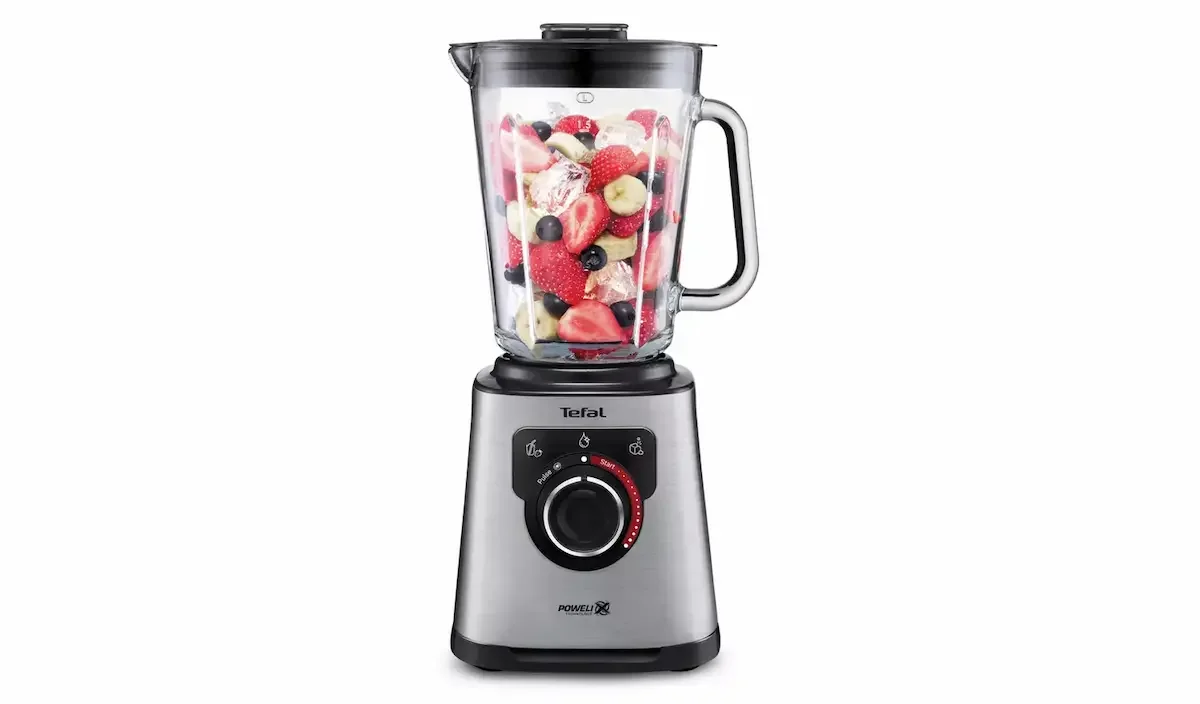
Tefal Perfect Mix+ BL811
The Tefal BL811 does not appear in many top-five lists and has no influencer backing. It also outperforms most blenders at the same price. If you train seriously, eat a lot and make dense shakes with oats, nut butter and frozen ingredients daily, this is the one built for that routine.
Key Specifications
Motor: 1200W, 28,000 RPM
Capacity: 2 litre heat-resistant glass jug
Blades: 6-blade Powelix stainless steel, titanium-coated
Settings: 3 preset programs (Smoothie, Ice Crush, Auto Clean) + Pulse
Build: Metal base, glass jug, suction-cup feet
Warranty: 2 years
What it does well
The Powelix blade system is what separates this from most blenders at the price. Six blades at an optimised cutting angle create a vortex that actively pulls ingredients down and inward rather than just spinning them around the jug. For protein shakes specifically, this means almost no dry powder sitting at the bottom and no scraping halfway through. One Amazon UK reviewer who had previously owned Ninja and Kenwood blenders switched to this specifically because of how cleanly it handles powders and soups together.
The glass jug is the other main advantage for serious shake drinkers. Plastic jugs absorb odour over time. Protein powder in particular leaves a smell in plastic jugs that does not wash out, especially whey and mass gainer. The glass jug does not have this problem. It also does not scratch or cloud, which means it still looks clean after 12 months of daily use. The suction-cup feet on the base keep it stable at high speed and stop it moving around the worktop.
The motor has an air cooling system built in, which means it handles back-to-back blending better than most machines at this price. If two people in the same household are both training, or you are batch-prepping four shakes at once, it keeps going without overheating.
The real-world complaints worth knowing
The titanium-coated blades cannot go in the dishwasher. The jug and the blade assembly can, but the blades themselves need handwashing. That is easy enough but worth knowing if you assumed everything was dishwasher safe.
Multiple reviewers across Amazon UK and Fakespot flag the same issue: make sure you order the glass jug version specifically. There is a plastic jug variant at a similar price point and it is a noticeably worse product. The glass version is what earns this machine its reputation. If you are ordering from Amazon, double-check the listing before adding to basket.
The jug is heavy. Not impractically so, but heavier than a plastic jug blender. If you have limited grip strength or a wrist injury, this is worth factoring in.
Who should buy this
You make dense shakes with oats, nut butter, frozen fruit or mass gainer
You blend multiple shakes in a row and need a motor that does not overheat
You want premium blending performance without paying Vitamix money
You prefer glass over plastic for hygiene and long-term durability
Who should not buy this
You want a portable shake cup to take to the gym. This is a countertop jug blender only
You want completely dishwasher-safe blades. The titanium-coated ones are handwash only
You have limited counter space. This is a full-size machine
You want something lightweight. The glass jug is heavy
Pros
Outstanding smoothness on thick, heavy shakes
Glass jug resists odour, scratching and clouding over time
Air cooling system handles back-to-back blending without overheating
Strong value at mid-range price
Suction-cup feet keep it stable at high speed
Cons
Titanium blades are handwash only, not dishwasher safe
Heavy jug
No portable cup option
Bulkier than personal blenders
Make sure you order the glass jug version specifically
Available from
Which blender is right for you?
Three blenders, one clear verdict. Here's how they stack up.
| Blender | Best For | Avoid If | Power | Cup / Jug | Warranty | Price |
|---|---|---|---|---|---|---|
| NutriBullet 900 Series | Simple daily shakes | You use oats or ice | 900W | Personal cups (600–900ml) | 1 year | £ |
| Ninja 2-in-1 BN750 | Shakes and everything else | Small kitchens / light sleepers | 1200W | Jug (2.1L) + cup (700ml) | 2 years | £££ |
| Tefal Perfect Mix+ BL811 | Dense training shakes | You need a portable cup | 1200W | Glass jug (2L) | 2 years | ££ |

Top pick
Golden Egg Pick
The Ninja 2-in-1 BN750 earns the Nest Tested Golden Egg Pick. We don't hand out Golden Eggs lightly. This one earned it.
Here is why it beats both alternatives for most people.
The NutriBullet 900 is a great blender for simple shakes, but its usefulness stops the moment your shakes get more complex. Add oats and it struggles. Add frozen fruit and it may stall. Its one-minute run limit is not a problem until it is. For anyone who trains consistently and eats for performance, the NutriBullet will feel limiting within a few months.
The Tefal BL811 is the better blender in pure performance terms, particularly for dense, heavy shakes. But it has no portable cup. If you train at a gym and want to blend and go, you need to pour your shake into a separate bottle every single time. It is also the most specific-use machine of the three. It earns its place for serious lifters with a home kitchen setup, but it is not the right tool for everyone.
The Ninja hits the middle of the Venn diagram that the other two miss. Its 1200W motor handles everything the NutriBullet cannot: oats, ice, nut butter, frozen fruit, thick mass gainer blends. The 700ml shake cup solves the portability problem the Tefal has. The Auto-iQ presets remove the guesswork that manual blending requires. And the two-year UK warranty means you are covered if something goes wrong.
The noise is real and the inner ridges on the personal cup are mildly annoying. But neither is a reason to walk away from what is otherwise the most complete protein shake blender available in the UK at this price.
If your shakes are always simple, buy the NutriBullet. If you are a serious lifter who will never need portability, buy the Tefal. For everyone else, the Ninja is the right answer.
Available from

The essentials
What to Know Before You Buy
Protein powder absorbs liquid fast and creates dry pockets. A weak motor stalls when you add oats or frozen ingredients. A poorly shaped cup or jug leaves powder sitting dry around the edges no matter how long you blend. These are the three things that actually determine whether a protein shake blender is worth buying.
Motor torque matters more than wattage. A stable 900W motor that maintains power under load is more useful than a 1200W motor that slows down when it hits resistance. The real test is not what the box claims but whether a blender stalls on oats or frozen fruit. If it does, you will end up stopping to shake the cup, scraping the sides and reblending, which defeats the purpose of having a blender in the first place.
Cup shape drives blending quality. A tall, narrow cup with a tapered base pulls ingredients into the blades. A wide, shallow cup creates dead zones where powder sits untouched. This is why some 600W blenders produce smoother shakes than 1000W blenders with poorly designed cups. The shape of the container matters as much as the power of the motor.
Blades need to create lift, not just spin. Angled blades that pull ingredients downward outperform flat blades that push them sideways. For protein shakes with added ingredients like oats and nut butter, this is the difference between a smooth, drinkable result and a shake you have to chew.
Glass jugs hold up better long term. Plastic jugs absorb odour over time, and protein powder is one of the worst offenders. Whey and mass gainer in particular leave a smell in plastic that does not wash out fully. If you are blending every day and want the machine to still smell clean in 12 months, glass is worth the extra weight.
Cleaning design matters at 6am. Smooth internal walls rinse clean in seconds. Complicated blade assemblies with ridges and narrow gaps take longer and frustrate you into cutting corners. If cleaning becomes a chore, you either skip shakes or stop cleaning properly. Both are problems.
Noise is worth thinking about. None of these blenders are quiet. But there is a difference between a steady, powerful hum and a rattling vibration that sounds like it is about to take off. If early morning blending near light sleepers is a concern, factor this in before buying.
The motor run limit is real. Most personal blenders and mid-range jug blenders have a maximum continuous run time of one minute before they need to cool down. For a simple shake this never matters. For a thick blend with multiple ingredients, it can mean stopping, waiting, and going again. Check the run limit before buying if you plan to make complex shakes.

Our process
How We Evaluated Our Picks
Protein shake blenders get reviewed differently to general blenders, and they should. A machine that makes a beautiful green smoothie from soft fruit and spinach can completely fall apart when you add oats, casein powder and frozen banana. The texture is thicker, the powder absorbs liquid fast, and the motor has to work harder from the first second. That is the scenario we evaluated against.
We started with a long list of blenders available in the UK at the time of writing, then filtered it down using the following criteria.
Motor reliability under real load. Wattage figures on the box mean very little. What matters is whether the motor maintains consistent speed when it hits resistance. We looked specifically at how each blender handled oats, frozen fruit and thick powder blends, because these are the ingredients that expose weak motors fastest. Any machine with consistent reports of stalling, overheating or motor failure within 12 months of regular use was removed from the shortlist.
Blade and vortex design. Not all blades are equal. We looked at blade angle, the number of cutting edges, and whether the design creates a downward pull that draws ingredients into the blending zone. Flat blades that push ingredients sideways leave dry powder at the bottom. Angled blades that create a vortex do not. This distinction matters more for protein shakes than for almost any other use case.
Cup and jug design. A tapered base pulls ingredients toward the blade. A wide, flat base creates dead zones. We assessed the internal geometry of each container and cross-referenced it with real owner feedback on whether dry powder or clumping was a problem.
Long-term reliability and build quality. We analysed owner reviews across Amazon UK, Robert Dyas, Trusted Reviews and gym forums, specifically filtering for reviews written after six or more months of use. First impressions are easy to get right. Holding up after daily blending for a year is harder. We also looked at the most common failure modes for each product: gasket issues on the NutriBullet, blade wear on Ninja, jug integrity on the Tefal.
Cleaning in practice. A blender that is annoying to clean will either get skipped or cleaned poorly. We looked at how each machine performs on a quick morning rinse, not just a thorough wash, and flagged any designs where protein powder is likely to accumulate in hard-to-reach places.
Value for the price paid. We did not look for the cheapest option or the most expensive. We looked for the machines that justify their cost with consistent, daily performance. Each pick here has to earn its place at its price point.
Any blender that appeared repeatedly in Reddit threads or Amazon Q&A sections with complaints about early motor failure, persistent leaks, or blade degradation within a year was excluded regardless of how well it performed in short-term tests.

From the goose's mouth
Frequently Asked Questions
Do I need a blender for protein shakes? If you mix whey with water, a shaker bottle is fine. If you add oats, nut butter, frozen fruit or creatine, a blender gives significantly better texture and makes the shake easier to drink. It also removes the clumping that shaker bottles leave with thicker powders.
What wattage do I need? 900W is enough for simple shakes with powder and liquid. Go to 1200W if you add oats, ice or frozen ingredients regularly. Below 900W and you will likely find the motor struggles with anything beyond a basic blend.
Are NutriBullets good for protein shakes? Yes, for simple shakes. The 900 Series is fast, reliable and easy to clean. It is not the right choice if your shakes regularly include oats, frozen fruit or nut butter.
Can you blend ice in protein shakes? Yes, but the blender needs enough torque. The NutriBullet can handle small crushed ice. The Ninja BN750 and Tefal BL811 both handle full ice cubes without issue.
Why is my protein shake foamy? Too much air in the blend. Add liquid first, blend at a lower speed initially, and do not over-blend. Cheaper whey powders also foam significantly more than higher-quality ones.
What is the best blender for mass gainer shakes? The Ninja BN750 or Tefal BL811. Both handle the thick, high-calorie blends that mass gainers produce without stalling or leaving powder at the bottom.
Do these blenders work with plant protein? Yes. Plant proteins are thicker than whey and absorb liquid more slowly. Add slightly more liquid than you would with whey and give it a few extra seconds of blending time for a smooth result.
Is the glass jug on the Tefal worth it over plastic? Yes, if you are blending protein powder every day. Plastic absorbs odour over time and protein powder is particularly bad for this. The glass version costs roughly the same on Amazon and is noticeably better long term.